
Climb into a Phoenix attic on a July afternoon and you will learn the lesson faster than any article can teach it: the roof deck above your head is running far hotter than the air outside, and everything under it is soaking that heat up. A radiant barrier is the one insulation-family product aimed squarely at that problem — not at the air temperature, but at the radiant heat streaming off the deck. Here is how it works, where it belongs in an Arizona attic, and — just as important — where it does not.
Quick Answer: What a Radiant Barrier Does
A radiant barrier is a highly reflective, low-emissivity surface — usually aluminum foil — that faces an open air space and reflects radiant heat instead of absorbing it. In an attic, the hot roof deck radiates heat downward all afternoon; a barrier stapled to the rafters or draped over the deck reflects most of that radiant energy back up before it can reach the attic floor and the ceiling below it. It is not a substitute for bulk insulation, and it does not work by thickness the way mass insulation does — it works by being reflective and facing air.
Three things a radiant barrier must have to work
- An air gap. The reflective face has to face open space. Foil pressed flat against the insulation or the deck does almost nothing.
- A hot side worth blocking. The bigger the temperature difference, the more radiant heat there is to reflect — which is exactly why Arizona is the best market in the country for these products.
- A code-evaluated product. Attic foil should carry a current evaluation report — the ICC-ES report system is how reflective insulation products document fire behavior and installation requirements for code officials.
Why This Matters More in Phoenix Than Anywhere Else
In a mild climate, the roof deck never gets extreme, and a radiant barrier has little to bite on. In the desert, the deck is the furnace. Dark shingle or tile roofing sitting in sun all day runs hot enough that the attic becomes the hottest space in the house, and it stays hot into the evening, re-radiating into bedrooms long after sunset. And the load it feeds is real: nationwide, more than half of household energy use goes to heating and air conditioning, and a Phoenix home sits at the air-conditioning-heavy end of that curve.
The radiant barrier attack is simple physics: block the radiant transfer at the top of the attic, and the attic floor — and the ceiling under it — never sees the worst of the heat. The Department of Energy's guidance on insulation and air-sealing improvements makes the same point: the envelope works as a system, and order matters.
Radiant Barrier vs. Bulk Insulation: Not a Competition
The most common confusion homeowners have is that a radiant barrier is an alternative to insulation. It is not — it is a different tool aimed at a different kind of heat.
| Radiant barrier | Bulk insulation (foam, blown-in, batts) | |
|---|---|---|
| Heat it blocks | Radiant heat — the infrared energy beaming off a hot roof deck | Conducted heat — heat soaking through the assembly over hours |
| How it works | Reflective, low-emissivity surface facing an air gap | Trapped air pockets that resist heat flow |
| Rated by | Emissivity and reflectivity of the surface | R-value at the installed thickness of the named product |
| Best role in Arizona | The first line on a hot deck — cuts what reaches the floor | The sustained defense at the ceiling plane or roofline |
That R-value line matters legally, too. The federal R-value rule (16 CFR Part 460) governs exactly how anyone selling insulation may talk about R-value — never per inch, always tied to a stated thickness of a named product, with the fact-sheet disclosure. Keep it simple: the higher the R-value, the greater the insulating power. Ask your seller for the fact sheet on R-values. Under that rule, an honest R-value quote always names the product and the depth going into your attic.
Where radiant barriers shine is as the top layer of a system: radiant barrier up top, adequate bulk insulation at the floor or roofline, and air sealing underneath. If your attic floor is thin on insulation, a top-up is usually the first spend, and the barrier rides on top of it. Our attic insulation service page covers how those jobs are sequenced.
Where the Barrier Actually Goes
There are three installs most common in the Phoenix metro, and the right one depends on the house:
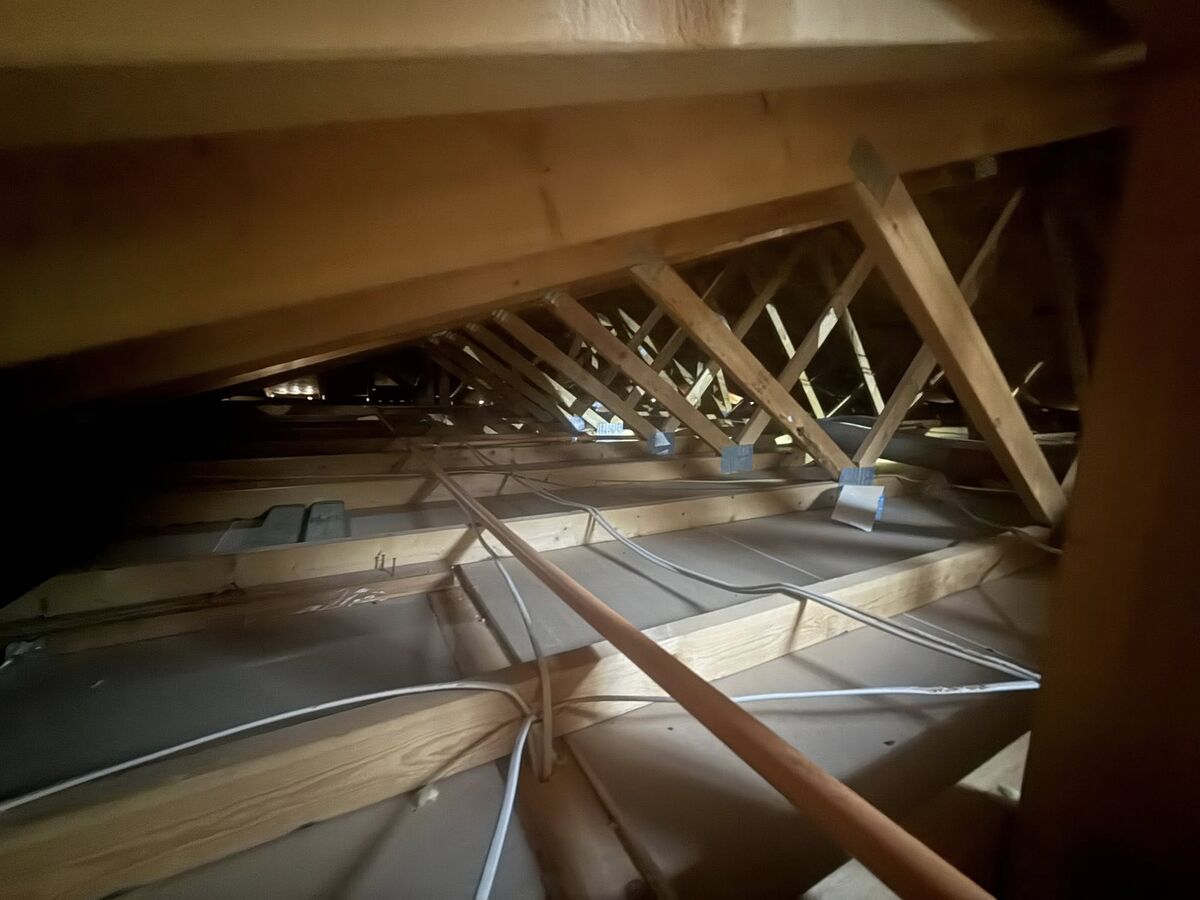
Retrofit staple-up. Foil sheets stapled to the underside of the rafters, with the reflective face down into the attic air space. This is the classic retrofit for existing homes: no roof work, no tear-out, usually a one-day install. The air gap below the foil is the whole game — that is where the radiant heat gets stopped.
Deck-drape (new roof or re-roof). Foil draped between the rafters over the deck before new decking or roofing goes on. Best durability, because the foil never sees foot traffic or dust accumulation. If you are already re-roofing, this is the cheapest the barrier will ever be.
Foil-faced sheathing (new construction). The barrier is baked into the roof deck itself. Clean, permanent, and standard practice on a lot of new desert builds.
What experienced installers avoid: reflective paint sold as a radiant barrier (you are trusting a sprayed-on layer's emissivity rating and its longevity in an attic that bakes all summer), and any install that lays foil flat on top of the attic floor insulation where dust can settle on the reflective face — a dusty face stops reflecting.
What a Radiant Barrier Does Not Do
Honest limits, because overselling is how this product got a mixed reputation:
- It does not replace insulation. It cuts radiant gain; it does almost nothing against the conducted heat that bulk insulation exists for.
- It does not cool the air. The attic will still be hot in July. The point is that less of that heat reaches your ceiling — the rooms below matter, not the attic thermometer.
- It needs the air gap maintained. Foil crushed against ductwork, stored boxes, or the insulation itself is a shiny sheet doing nothing.
- It is not a moisture strategy. In an attic with bath-fan or duct leakage problems, fix the air sealing first — a cold reflective surface is not a vapor management plan.
And one more, specific to our trade: a radiant barrier is not the answer to every hot-room complaint. If one bedroom runs hot, the cause is often duct leakage, unsealed can lights, or a thin insulation spot over that room — a diagnosis job, not a foil job. That is why a reputable installer inspects before quoting. When the fix turns out to be foam at the roofline instead, spray foam attic insulation is the page that covers it; when the attic floor just needs more depth, a blown-in top-up is the lighter job. The material trade-offs between those worlds are compared in our spray foam vs fiberglass guide.
Fire Safety and Code, Plainly
Foil in an attic sits close to wiring, can lights, and chimney chases, so the product and the install both have to respect fire. Buy products with a current evaluation report — the ICC-ES system is how manufacturers document compliance for code officials — and install it clear of ignition sources, per that report's terms. Products for the trade carry their flame-spread and smoke-developed numbers on the data sheet; ask to see it, the same way you would ask for the R-value fact sheet. This is standard stuff for a licensed contractor, and the kind of envelope detail trade associations such as the Spray Polyurethane Foam Alliance are organized around.
What a Radiant Barrier Job Should Look Like
A proper job starts in the attic, not at the sales desk: what the deck looks like, what depth of insulation is on the floor, where the air leaks are, whether the ventilation path is real. Then the options come in plain order — air seal first, depth second, barrier on top — with the trade-offs stated. On install day the crew protects the space, staples the foil to the rafters with the reflective face into the air space, keeps the clearances the evaluation report requires, and walks you through what changed. And if the inspection shows a radiant barrier is the wrong tool for your house, you want the contractor who says so — the estimate is free. Call us at 623-241-1939.
We have written before about how the desert punishes a weak envelope — the strategies guide and the summer heat guide both cover the full attic system. The radiant barrier is one layer of that system, and in this climate it earns its place.
Frequently Asked Questions
Is a radiant barrier in an attic worth it in Arizona? In a cooling-dominated climate like Phoenix, it is the product best matched to the problem — a hot deck radiating down all afternoon. It earns its keep as part of a system: barrier up top, real insulation depth at the floor, air sealing underneath. On a mild-climate house it would be a marginal spend; here it is the opposite.
Does a radiant barrier replace attic insulation? No. It blocks radiant heat; bulk insulation resists conducted heat. The two do different jobs, and most Arizona attics need the insulation depth addressed first or alongside the barrier.
How does a radiant barrier work? It is a low-emissivity reflective surface facing an air space. Radiant heat from the hot roof deck hits the foil and most of it reflects back up instead of passing to the attic floor. No air gap, no performance.
Can I install a radiant barrier myself? Foil staple-up looks DIY-friendly, but attic work in July is genuinely dangerous, the clearances around wiring and light fixtures matter for fire safety, and a flat-laid or crushed install wastes the money. This is a one-day job for a crew with the right gear.
Will dust ruin the radiant barrier? Dust on the reflective face degrades it over years — which is why foil is normally installed facing down into the air space under the rafters (a vertical face barely collects dust), not flat on the attic floor face-up.
Does the foil face up or down? The reflective face must face the open air space. Under-rafter staple-up faces down into the attic. Draped over the deck between rafters, it faces down into the rafter bays. Face the air, and keep the gap.
Is attic foil a fire hazard? Products made for the job carry flame-spread and smoke-developed ratings documented in an evaluation report, and the report's installation clearances keep it away from heat sources. Ask any installer for the report — if they cannot produce one, that is your answer.
Does a radiant barrier help in winter? Its benefit runs the other way in cold climates (it can slightly slow desirable winter solar gain). In Phoenix, where the cooling season dwarfs the heating season, that trade barely registers — this is the right climate for the product.
What is the difference between a radiant barrier and reflective insulation? A radiant barrier is the standalone reflective sheet facing an air space. Reflective insulation pairs the foil face with a core (bubbles, foam) and carries an R-value for the assembly. In an Arizona attic retrofit, the standalone barrier under the rafters is the common install.
How long does a radiant barrier last? A properly installed foil under the rafters is protected from UV and weather and can last for decades. The failure mode is not age — it is a disturbed install: foil crushed by storage, torn during cable work, or painted over.
How much does a radiant barrier cost? It depends on the attic — square footage, pitch, what is up there now, and whether the job bundles with a top-up or air sealing, which it usually should. An honest quote comes after seeing the attic; sight-unseen numbers are guesses.
Will a radiant barrier lower my cooling bill? Less heat reaching the ceiling means the AC works less hard in the afternoon and evening — that is the mechanism. How much it moves your specific bill depends on the rest of the envelope, which is why the whole attic should be seen before anything is quoted, rather than promising a number. Savings vary. Find out why in the seller's fact sheet on R-values. Higher R-values mean greater insulating power.